| | |
|
There are no mailing lists at this time.
| |
| | |
|
| Christmas Ornament History
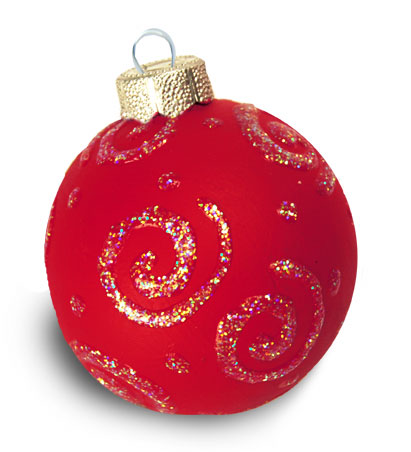 This section will give you great ideas and inspiration to create holiday gifts, yummy treats, and Christmas traditions that will add to the special holiday feeling of your personalized ornaments. If you have any information you would like to share with us, we would love to add it to this page. Simply email us at info@personalizedornamentsworld.com This section will give you great ideas and inspiration to create holiday gifts, yummy treats, and Christmas traditions that will add to the special holiday feeling of your personalized ornaments. If you have any information you would like to share with us, we would love to add it to this page. Simply email us at info@personalizedornamentsworld.com
The tradition of Christmas trees and Christmas Ornaments is a much disputed one what with several theories about their origin doing the rounds for a long time. The most popular theory holds that the tradition was started by a monk who came to Germany in the 7th/8th century to preach. It is said that this monk was Saint Boniface, the Apostle of the Germans. According to history, the saint was the first one to bring a fir tree to the German people to decorate, for he claimed that its triangular shape represented the Holy Trinity - God, his son Jesus, and the Holy Spirit. The tradition was lapped up by the devout Germans who started decorating the Christmas tree in a liturgical way with simple, white candles. This however, changed in the 15th century when ornaments began to be incorporated into the Christmas decorations in Germany. In Latvia, circa 1510, a fir tree was decorated with roses which was associated with the Virgin Mary. This event is often hailed as the pioneer of modern Christmas decorations.
As time passed, the Christmas tree traditions gradually found their way into English homes where the decorations began to be more ornate what with glass beads and hand-sewn snowflakes being used to adorn the trees. With the arrival of the 1800's, the Christmas tree tradition eventually began to invade the American homes.
The first decade of the 1800s saw in the Christmas tree decorations the use of such eatables as fruit (specially apples) and nuts. But why were these began to be used? The reason was not far to seek. These were the items that would grow on trees. Moreover, along with the evergreen trees themselves, these fruits symbolized the regeneration of life in the spring season. Soon other fruits also began to be hung on the trees, along with paper streamers and bits of shiny metal foil. It was from this time that the idea of reflecting the light of the room on the tree came into being. Christmas is, after all, a season of lights and merriment. The idea, hence, soon became popular. One more concept arose during this period and began to be practiced with much enthusiasm by many German homes. It was the use of foods like gingerbread or other hard cookies, that began to be baked in varied shapes as fruits, stars, bells, hearts, angels and were used in the decorations. The idea was a great hit with the German folks.
As the tradition of Christmas trees and ornaments became more widespread, each country added its own ingenuity to the decorations. Americans, for example, would string long strands of cranberries or popcorn to encircle their trees. In the UK, imaginative ornaments of lace, paper or other items showed the ingenuity and skill of their makers. Small newspaper scraps or magazine illustrations also began to be used in the family Christmas tree decorations. Small gifts were other items that began to be hung on the trees, sometimes contained in little handcrafted baskets, nestled in the crook of a branch or just suspended by a small piece of thread. In fact, so much of decorative items began to be used during this period that with each passing year it became increasingly difficult to actually see the tree beneath the ornaments.
It is to be noted that until the 1880s, Christmas tree decorations had mainly been the creative domain of family and friends and the only ornaments available in the market were German hand-cast lead and hand-blown glass decorations. But the 1880s saw many German entrepreneurs seriously thinking of manufacturing ornaments on a mass scale and selling these strictly as Christmas ornaments. The idea was soon translated into reality. The glass firms around Lauscha, the hub of the trade in Germany, which had until then been engaged in making glass articles such as bottles and marbles soon began to create little glass toys like molds of children, saints, famous people, animals and other forms and released them in the market. This new type of Christmas ornament was an instant success and was met with a huge demand. Soon, nearly every family in and around Lauscha became involved in some way or other in the creation of Christmas glass ornaments working either in a factory or in a home-based foundry. Now each ornament had a touch of individual craftsmanship and became highly prized possessions. As a result, Germany went on to capture the world market in Christmas ornaments made from glass molds and for a long time was the major world source for glass ornaments. Most hand-blown glass ornaments used for decorations on Christmas trees came exclusively from Germany.
The history of German Christmas ornaments is incomplete without a mention of the non-glass ornaments that were manufactured in Dresden, a city near to Lauscha. The artisans in Dresden constructed brightly colored ornaments resembling fish, birds and other animals out of pressed and embossed paper and fitted nicely with the Christmas ornament traditions. These were also suitable for other festivals and merry occasions such as birthday parties, weddings and any other event worth celebrating. Like the glass ornaments, these too were a hit everywhere.
Other ornaments around this time consisted of items made of pressed tin with brightly colored printed surfaces. Thin foil strips, which are better known today as 'icicles' or tinsel, also began to be created in Germany and found much favor with Christmas celebrants the world over.
With the commencement of the Twentieth century, Christmas began to grow more and more popular among most Europeans and Americans and began to be celebrated with gusto. It was during this period that the German monopoly over the Christmas ornament market was broken. Since 1925, Japan challenged Germany's dominance over the world market by producing ornaments on a huge scale. They brought in newer, more colorful designs and began to bite off the German market. Later, Czech Republic also entered the competition with an impressive amount of fancy Christmas ornaments. By 1935, more than 250 million Christmas tree ornaments were being imported to America. Christmas ball and bauble ornaments have been quite popular since then.
The Corning produced glass ornaments met with a resounding success. By 1940, the company was making ornaments on a much larger scale than the manually produced German items, and sending them to other companies for decoration. The biggest customer was none other than Max Eckhardt who by now had established an All-American company known as Shiny Brite. Then the World War II broke out in 1939 which caused severe material shortages and forced Corning to do away with the earlier practice of making the inside of the ornaments silvered on the inside (to make them shine brightly for longer periods) and instead decorate the clear glass balls with simple thin stripes in pastel colors which required much less metallic oxide pigment. Fortunately, Corning was able to alter its machines to produce an increased variety of shapes and sizes of glass ball without using scarce war material. But the war crisis resulted in a forced replacement of the sturdy metal cap (that held the little hook for hanging the ornaments) to a cardboard one.
Post World War II, F.W. Woolworth's highly popular "Five-and-dime stores", it's competitor Kresge and Neisner's and some more department stores like Macy's and Gimbel's were the main source of Christmas ornaments and decorations. The purchase of these ornaments were, however, limited to a few commemorative ornaments a year. Complexity and variety of ornaments were the driving engines of ornament sales.
The end of the Second World War also found most of Lauscha's glassworks turn into state-owned entities. The production of baubles in Lauscha ceased. The fall of the Berlin Wall resulted in most of the firms being reestablished as private companies. Only about 20 small glass-blowing firms are active in Lauscha today. Although glass baubles are still produced, baubles are now made mainly of plastic and available worldwide in a huge variety of shapes, colors and designs.
|
|
|